Pre-Seed · PoC In Progress · 2026

From Palms
to Permanence.

We're starting as a lean biochar producer — buying coconut husks, shells, and fronds that farmers around Mandya and Hassan currently burn, and processing them into audited, verified carbon removal at our own plant site in Hirisave. As we scale, we'll put kilns directly into farmers' hands.

Biochar Carbon Removal · Mandya & Hassan, Karnataka
Scroll
01 The Problem

Every coconut leaves a waste trail — and it is heating the planet.

Coconut farming fuels rural economies across India's coconut belt, but the harvest leaves behind a massive waste stream — husks, shells, and fronds that aren't used for anything else. Roughly 60% of every coconut is inedible biomass.

HusksShellsFronds
0%
of every coconut is inedible biomass
0M
coconuts produced in Karnataka each year — India's top producing state
CH4
methane released when waste rots or smolders
Across Mandya and Hassan, husks, shells, and fronds that aren't used get openly burned or left to rot in the field — releasing carbon that could instead be locked away for centuries, and offering farmers no return for the labor of clearing it.
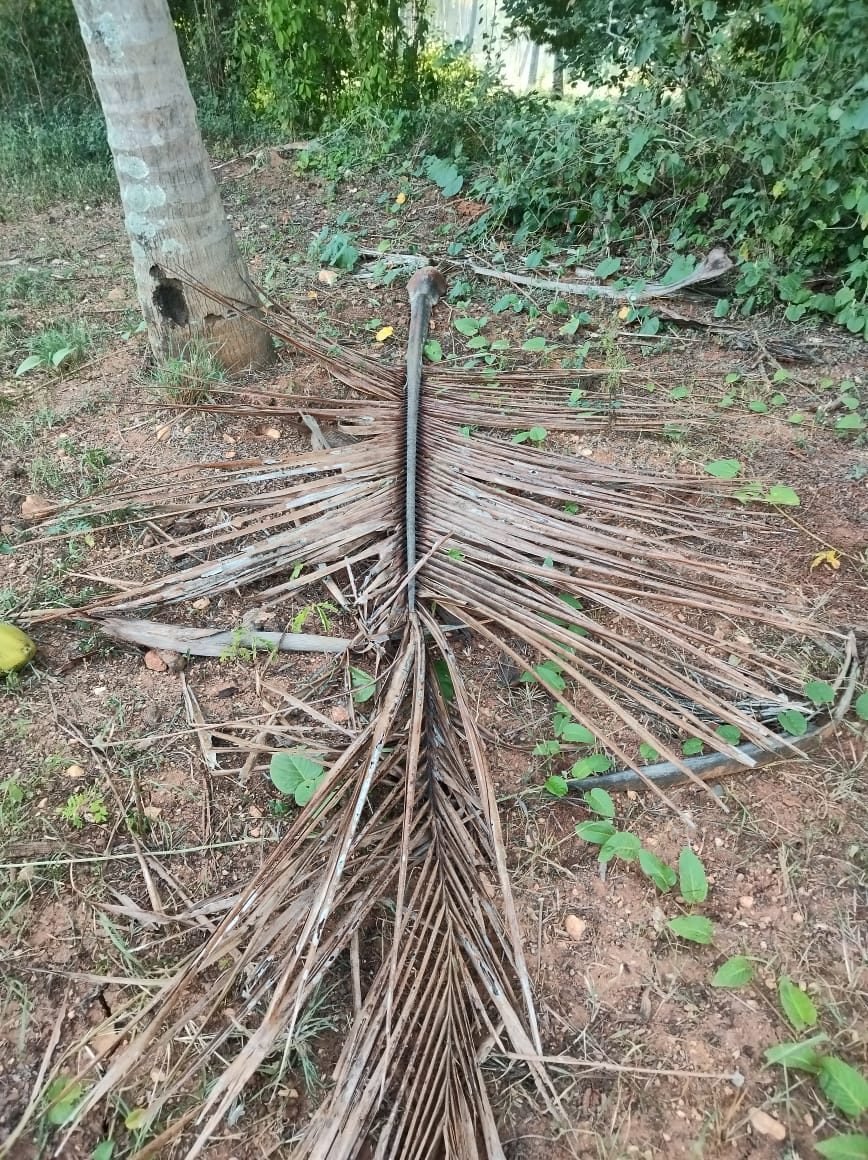
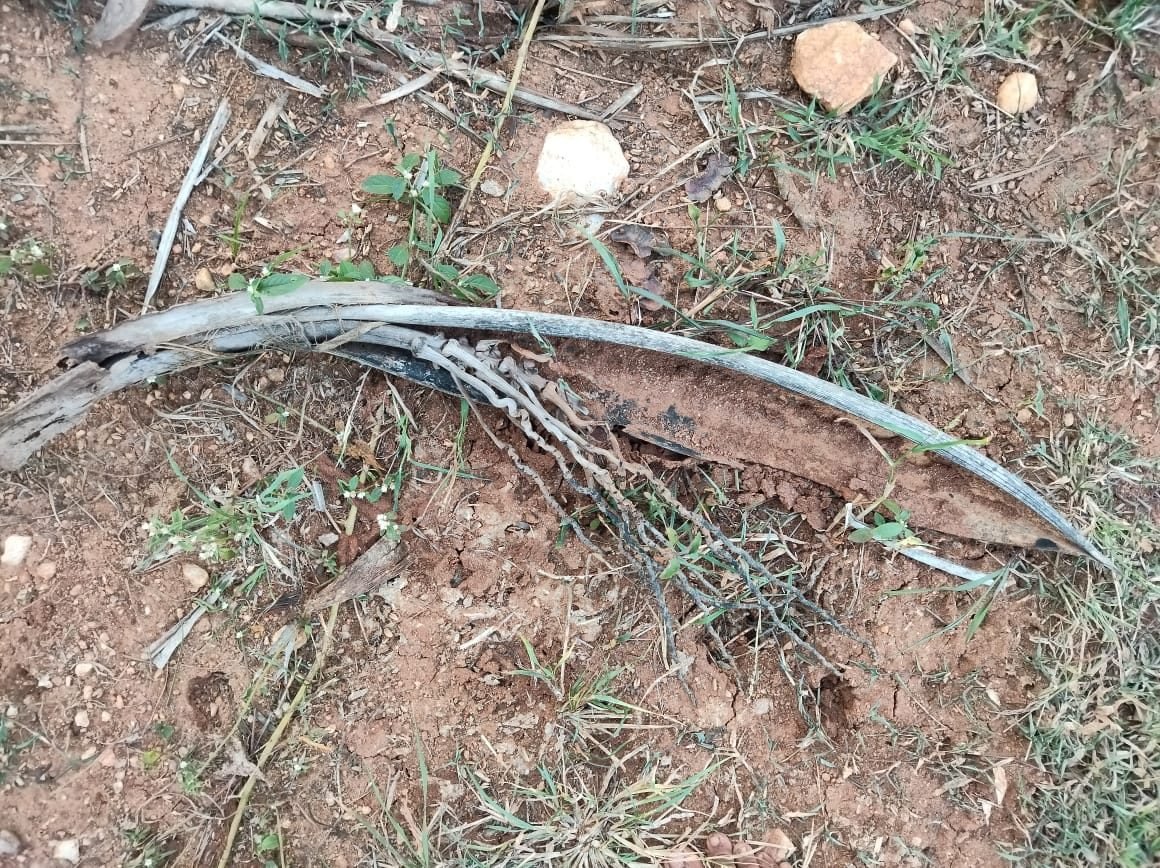
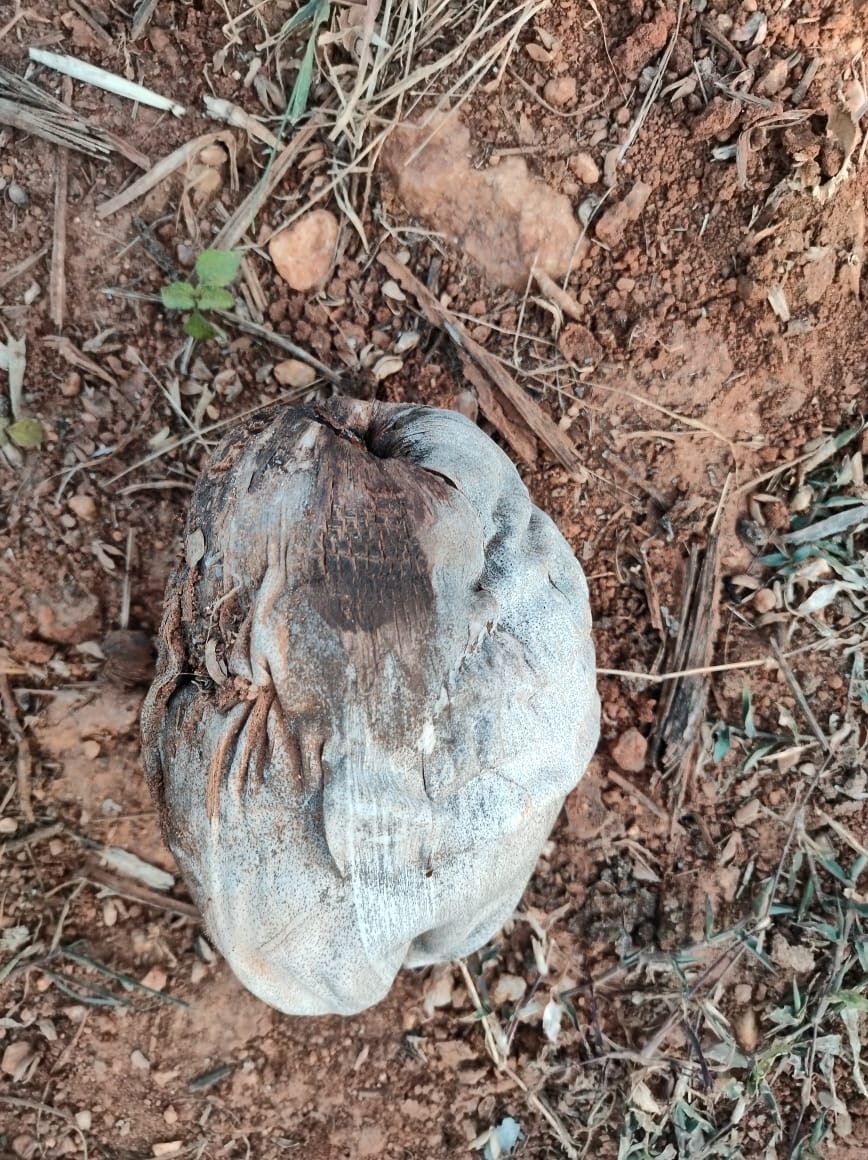
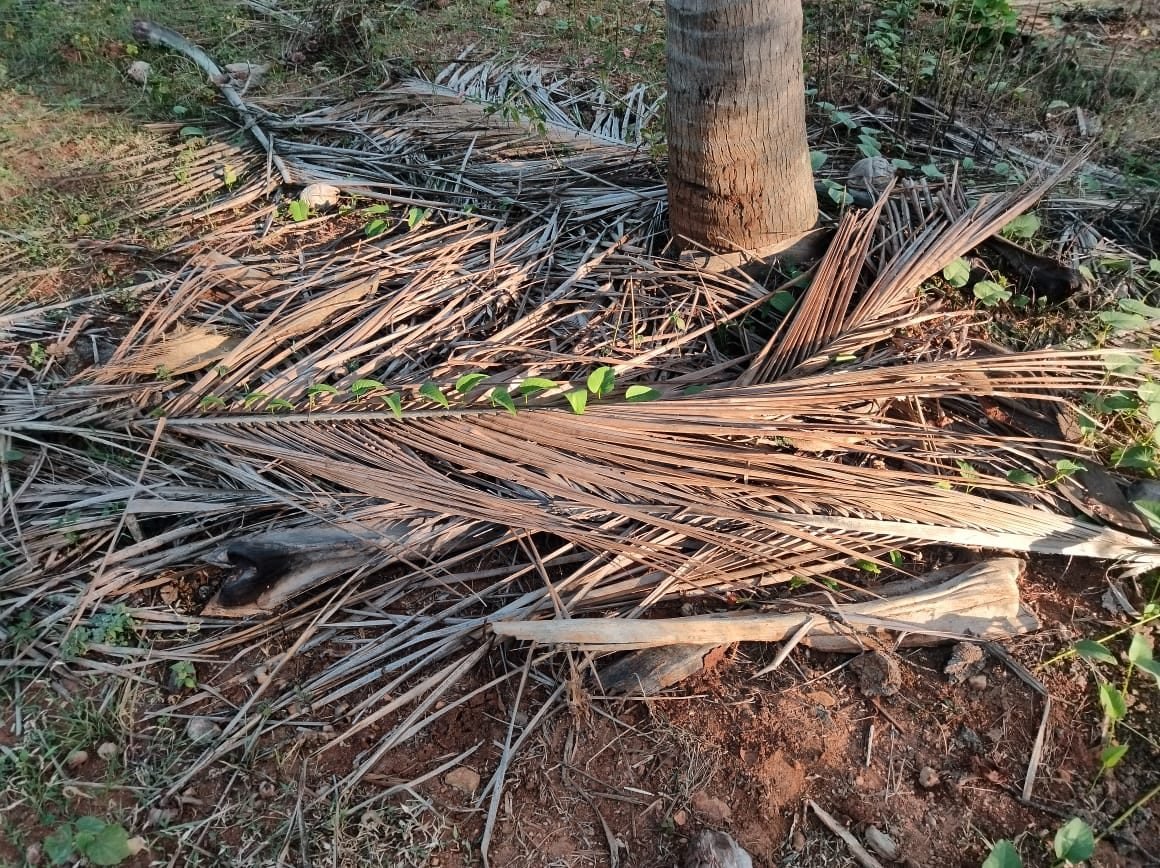
Field documentation
Dried coconut fronds piled at the base of a palm
A single dried coconut frond on the ground
A dried coconut frond stem with leaflets stripped away
A bleached, dried coconut husk on the ground

Coconut waste as we find it in the field — husks, fronds, and fallen nuts left to rot after harvest. Early field photos ahead of the formal geotagged baseline capture described in Roadmap Step 01.

02 Our Solution

Pyrolysis: heat biomass in the absence of oxygen.

This is the mechanism behind every batch — the same chemistry whether it's running in our test kiln today or in a farmer's kiln down the line.

01

Collect feedstock

Husks, shells, and fronds are gathered from farmers around Mandya and Hassan who would otherwise burn or abandon them.

02

Pyrolyze at 450–650°C

Feedstock enters a low-oxygen kiln. Heat splits the material into solid biochar, syngas, and bio-oil — the syngas feeds back into the kiln, so the process is largely self-sustaining once lit.

03

Lock carbon, then verify

Stable biochar carbon resists breakdown for centuries. Every batch is weighed, sampled, and checked against lab results before any claim is made about it.

Carbon residence: 100s–1000s of years ~2.5–3 t CO2/t biochar (indicative, not yet CocoChar-confirmed) Syngas recovers process heat

Coconut palms already pull carbon from the atmosphere.
We make sure it stays out — for centuries.

— Mandya & Hassan, Karnataka —
03 The Market

A large, and largely wasted, feedstock base.

None of the figures below are CocoChar's own volumes — they're industry context for the scale of the opportunity behind our own PoC.

Karnataka's coconut production
0M
nuts produced per year — India's top coconut-producing state
Karnataka
6,151M
Tamil Nadu
6,092M
Kerala
5,523M
Andhra Pradesh
1,707M

Karnataka, Tamil Nadu & Kerala = ~87% of India's coconut output. Source: Coconut Development Board, 2023–24 (nuts/year).

Feedstock & credit-price context
>0%
of Karnataka's coconut output comes from just 3 districts — Tumakuru, Hassan & Mandya, our own sourcing region
₹14,300–15,700
indicative price per tonne CO2 for durable biochar credits (industry data, not a CocoChar quote)
~105–200 kg per tree
total husk, shell & frond residue per palm each year — a rough combined estimate, not a directly sourced or CocoChar-measured figure. Around 60% of every coconut is inedible biomass, husk and shell alone accounting for ~35–60 kg/palm/year (~70–100 nuts/palm/year × FAO mass fractions). Fronds add another ~70–140 kg/year (~12–14 shed per year × an estimated 6–10 kg dried weight each).

Sources: Coconut Development Board (production), FAO (husk/shell mass fractions), agricultural & bioenergy literature (frond count and weight — figures vary by source), industry biochar-market research (₹ figures converted at ≈₹95/US$1). Figures describe the addressable market, not CocoChar's current scale.

04 Our Model

We start as the producer. We scale as the enabler.

CocoChar proves the model first with a small, self-funded validation kiln. Once that PoC is lab-validated, we raise funds to build a commercial-scale kiln — still self-operated — and start producing and selling biochar and carbon credits ourselves. Only once that commercial kiln is running do we shift toward equipping farmers with kilns of their own, with CocoChar as the verification and sales layer on top.

PoC — Self-funded, now

Prove the model

We collect coconut husks, shells, and fronds from farmers around Mandya and Hassan, paying for material they'd otherwise burn, and run a small validation kiln at our own plant site in Hirisave under full data capture and lab validation.

>70%target fixed carbon
<0.4target H:Corg ratio
Phase 01 — After PoC, funded

Commercial kiln, self-operated

Once the PoC is validated, we raise funds to build a commercial-scale kiln at Hirisave — still run by us, not farmers — and begin producing and selling biochar and verified carbon removal credits ourselves.

Fundedcommercial kiln build-out
Self-operatedwe produce & sell first
Phase 02 — Once Phase 01 is selling

Farmers produce, we verify

Farmers operate their own low-cost kilns on their own land. CocoChar shifts to the dMRV and verification layer, expanding from a single Artisan Pro producer into a registered C-Sink Network.

1,500 m³Artisan Pro cap / yr
C-SinkNetwork upgrade path

Independent verification

Third-party validation and verification, not self-reported claims — the same structure institutional buyers expect from any credible carbon project.

Lab-grade permanence proof

NABL-accredited testing on every composite sample, targeting the fixed carbon and H:Corg thresholds that distinguish real carbon removal from marketing.

Registry-native data

Field data structured from day one to move cleanly from an Artisan Pro submission into a future C-Sink Network registration — no retrofitting required later.

05 Roadmap

Our PoC, in five steps: proving we can produce.

A deliberately low-capital, self-funded path to a lab-validated, registry-ready first batch — before we ask anyone to fund a commercial-scale kiln, and later the shift to a farmer-operated network.

Step 01

Baseline documentation

Geotagged, timestamped photos of fields where waste is currently burned — the "before" evidence registries require to prove additionality.

Step 02

Last-mile MRV setup

Offline-capable data collection built on open-source tools, logging plot GPS, input weight, pyrolysis conditions, and final batch weight for every run.

Step 03

Kiln fabrication & production testing

Two locally fabricated flame-cap kilns installed at our own processing site in Hirisave, run through a five-batch cycle to stress-test both the equipment and the data workflow.

~₹15,000
Step 04

Independent lab validation

Composite samples sent to an NABL-accredited lab for fixed carbon content and H:Corg ratio — the chemistry that proves permanence, not just production.

~₹10,000
Step 05

Standards alignment & first offtake conversations

Package the full data trail — MRV logs, lab certificates, baseline evidence — and register as an Artisan Pro producer under the Global Artisan C-Sink Standard, opening conversations with registries and buyers.

Self-funding Phase 01 production & lab validation Exploring non-dilutive grant & incubator pathways
06 The Ask

What we're looking for right now.

We're a lean, founder-led team self-funding our PoC — a small validation kiln and lab testing. Once that's proven, we're looking to talk to a small number of partners who can fund our first commercial-scale kiln, so we can start producing and selling biochar and carbon credits ourselves. Phase 02 — a farmer-operated network — follows once that commercial kiln is up and selling.

Not raising a fixed round — three things we need
Grants — non-dilutive, equity-free funding to build our first commercial-scale kiln, and later to expand into a farmer-run network.
Incubation — early-stage climate tech programs that support dMRV and decentralized CDR models specifically.
Offtake conversations — corporate buyers or brokers open to early conversations around our first verified batch of credits.
PoC — self-funded spend so far
₹0
Total committed budget across kiln fabrication and lab validation
Kiln fabrication & production testing~₹15,000 · 60%
Independent lab validation~₹10,000 · 40%
Total~₹25,000
07 Let's Talk

Let's lock carbon into the soil — together.

Coconut palms already pull carbon from the atmosphere. We make sure it stays out — for centuries. We are looking for grant bodies, incubators, and early offtake partners who want durable removal and rural impact, built stage-honest from day one.